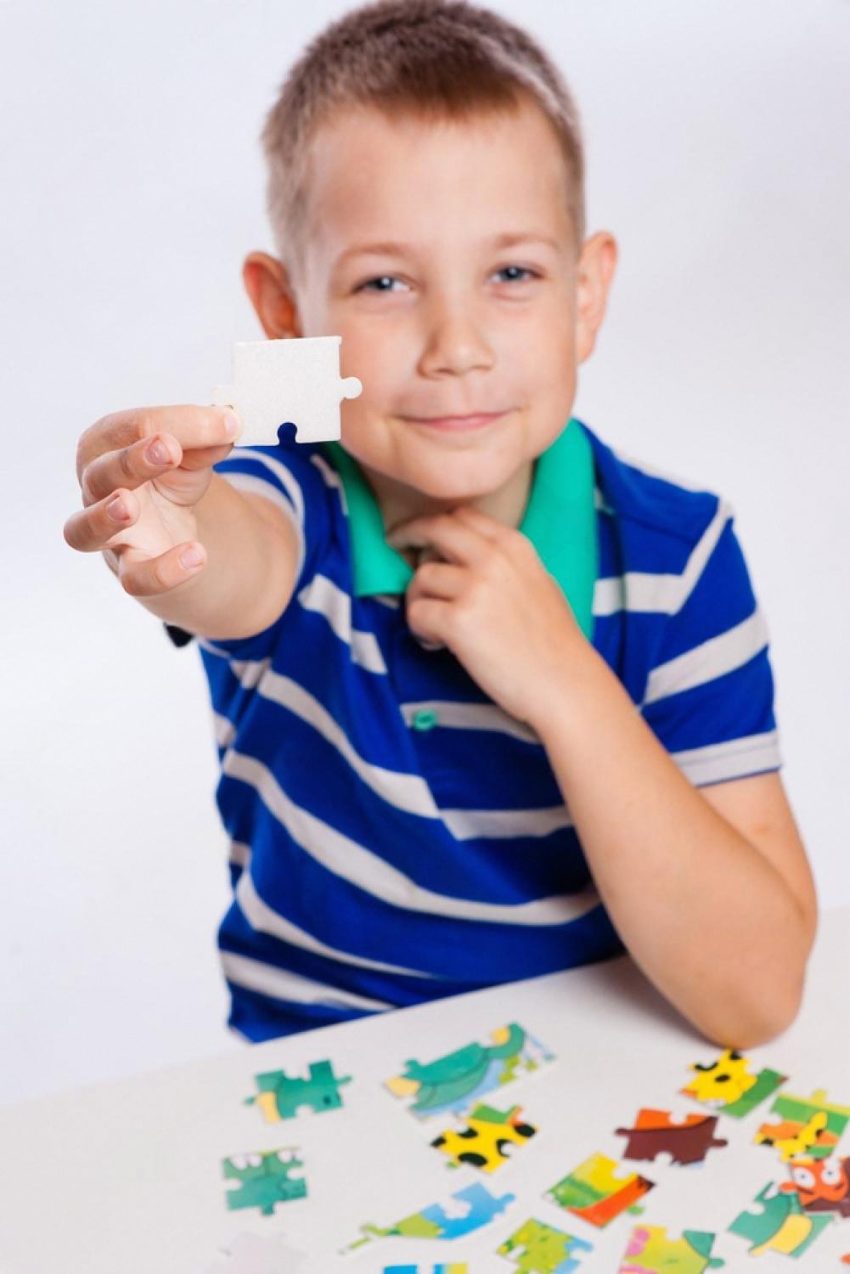
Play that teaches
Small pieces, big lessons in focus
Parents across the UAE are looking for screen-free activities that hold a child’s attention for longer than a few minutes. Jigsaw puzzles keep coming back into the conversation for a simple reason: a child cannot finish the picture without sitting down, looking closely, and trying again after a wrong guess. That is exactly the skill set schools in Dubai and Abu Dhabi want children to bring into a classroom.
The question most families face is not whether puzzles help, but which type of puzzle fits which child. A chunky 12-piece set and a 500-piece family puzzle look similar in the shop, yet they teach very different things.
What the science says
Why the brain loves a jigsaw
Sorting puzzle pieces is a workout for several skills at once. A child has to tell colours apart, read the shape of a tab and a blank, and hold a mental image of the finished picture. Researchers who study early cognition have linked this kind of shape-and-space play with stronger visuospatial reasoning later on, as summarised by the American Psychological Association.
The perseverance part is quieter, but just as important. Every puzzle contains dozens of small failures, a piece that looked right and did not fit, before the reward of the last click. That loop of try, fail, adjust, try again is the same loop a child will use later in maths, reading and sport.
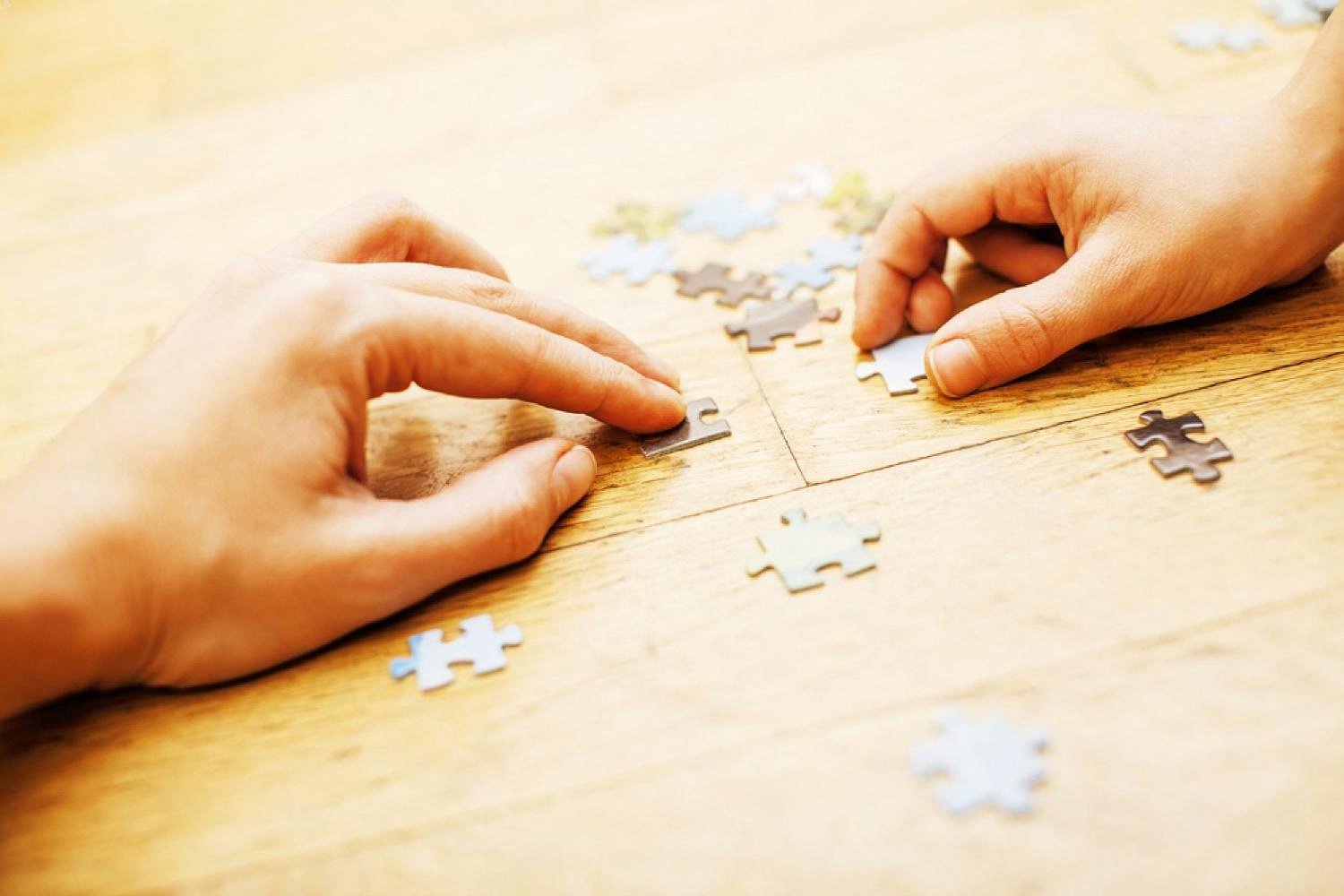
Chunky pieces or hundreds of pieces: which is right?
Large-piece puzzles (12 to 48 pieces)
- Easy for small hands to grip, ideal for ages 2 to 5
- Short enough to finish in one sitting, which builds a sense of completion
- Great for early colour and shape recognition
- Sturdy cardboard survives repeated use
- Low frustration ceiling, keeps the child coming back
Large puzzles (300 to 1000 pieces)
- Too many pieces for a young child working alone
- Needs a dedicated table for several days, tricky in small apartments
- Can feel overwhelming without a parent or sibling helping
- But: brilliant as a shared weekend project for ages 8 and up
- Teaches long-form patience in a way a quick puzzle cannot
Ages 2 to 6
When to pick the chunky set
For toddlers and pre-schoolers, the goal is not to build a masterpiece. It is to train the hand and the eye. Thick wooden or cardboard pieces are forgiving, a child can turn them, drop them, and try the other way round without tearing anything. Sets built around animals, vehicles or simple scenes give parents an easy vocabulary game on top of the puzzle itself.
A good rule of thumb in this age band: the child should be able to finish the puzzle in ten to twenty minutes with a little help. If it takes an hour of tears, the piece count is too high. If it takes two minutes, size up. Reliable brands stocked as puzzles for kids in the UAE label piece counts and suggested ages clearly on the box, which makes matching much easier than guessing in a general toy aisle.
Ages 7 and up
When to pick the big family puzzle
Once a child can sit with a task for half an hour without losing the thread, a 300 or 500-piece puzzle becomes a genuinely rewarding project. This is where the perseverance lesson goes deeper. A 500-piece image cannot be solved in one sitting, so the child learns to leave a task unfinished on the table and come back to it, an unusual habit in an age of instant everything.
These larger sets also work as a family activity, which suits the long UAE summers when outdoor time is limited by heat. A parent can sort edge pieces while a child hunts for a specific colour block. Nobody has to talk, and nobody has to win. That relaxed, side-by-side attention is rarer than it sounds.
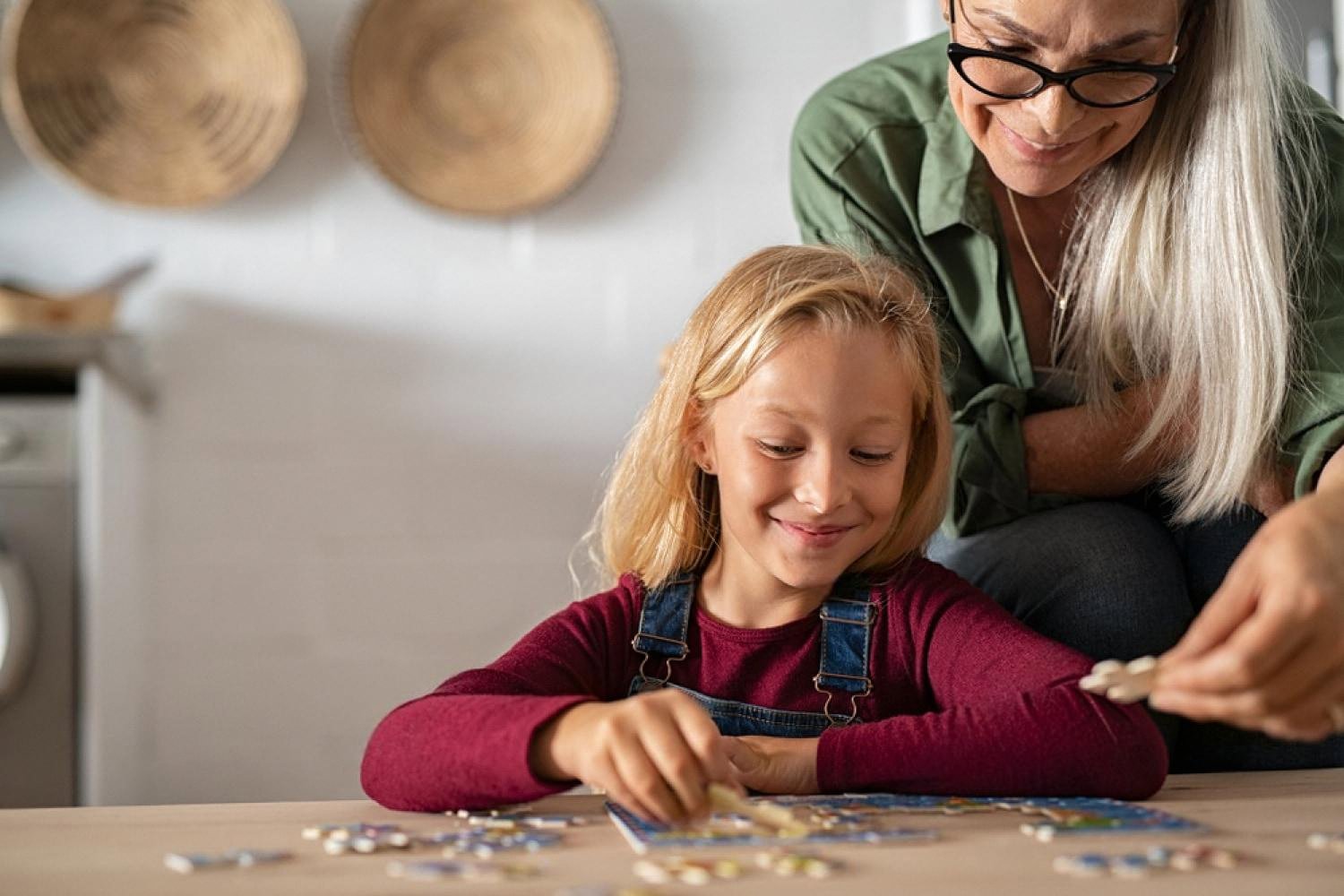
If a child begs to keep going for one more piece, the puzzle is doing its job. If they wander off after two minutes, drop the difficulty until the pull comes back.
What a child actually practises while they play
- Sustained attention. The puzzle is not finished until the last piece clicks, so the child stays with one task longer than a swipe on a tablet would allow.
- Fine motor control. Pinching, rotating and pressing pieces strengthens the same small muscles used for writing and buttoning a shirt.
- Spatial reasoning. Matching a curve to a curve is early geometry, the kind flagged in reports from UNICEF as a foundation for later maths.
- Emotional regulation. Wrong guesses happen constantly, and the child learns to keep going instead of throwing the box.
- Pride in a finished thing. Seeing the whole picture at the end is a small but real hit of satisfaction, one the child directly earned.
Buying tips
Getting the match right
- Watch the piece count, not the age on the box. Some four-year-olds are ready for 48 pieces, some six-year-olds still enjoy 24.
- Pick images the child actually likes. Dinosaurs, desert animals, cars, whatever holds their eye first.
- Prefer thicker cardboard for younger kids. Flimsy pieces bend at the tabs and stop fitting properly.
- Keep one puzzle a step above their current level. A little stretch is where perseverance is built.
- Store finished puzzles in a labelled bag. Repeats are useful, a child who has done a puzzle twice starts noticing patterns.
Frequently asked questions
At what age can a child start doing puzzles?
Most children can manage very simple wooden puzzles with 2 to 6 large chunky pieces from around 18 months. By age 3 many enjoy 12 to 24 piece sets, and by 5 or 6 they can often handle 48 to 100 pieces. Watch the child, not the age label on the box.
How do puzzles help with attention and perseverance?
A jigsaw cannot be half-solved. The child has to stay with the task until the picture is complete, which trains sustained focus. Along the way they make lots of wrong guesses, and learning to try a different piece instead of giving up is exactly what perseverance looks like in practice.
Are puzzles better than educational apps for young children?
They are different. Apps give fast, bright feedback that can feel more exciting in the moment. Puzzles give slower, physical feedback that strengthens fine motor skills and rewards patience. Most experts recommend both, but with generous time set aside for hands-on play, especially before age six.
How many pieces should a 5-year-old puzzle have?
A reasonable starting range is 24 to 48 pieces. Confident five-year-olds who already enjoy puzzles can go up to 60 or 100 pieces. If the child finishes in a few minutes, size up. If they get frustrated within ten minutes, size down.
Can adults and older kids do a puzzle together with a younger sibling?
Yes, and it is one of the most useful ways to use puzzles. Larger 300 to 500 piece sets work well as a shared family project. The younger child can sort by colour or hunt for edge pieces while older members work on harder sections. It teaches teamwork on top of everything else.
Where should I store an unfinished puzzle in a small apartment?
A large tray or a felted puzzle mat that can be rolled up is the practical answer for UAE apartments. It lets the family clear the dining table between meals without breaking up the work in progress, so the puzzle stays a multi-day project rather than a one-sitting sprint.